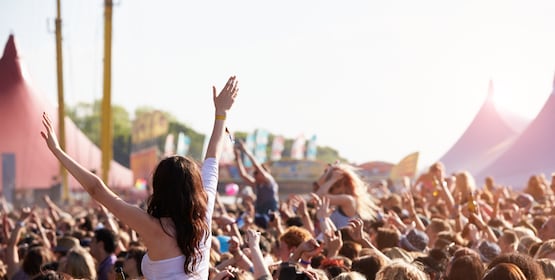


Music festivals culture has deep roots with varied and mixed influences that have grown throughout time in different cultures. Its origin goes back to the Old Age, with examples like the Pythian Games or the Panathenaea of Ancient Greece, where musical and theatrical competitions played a role. Rome had similar festivities, like the Saturnalia celebration. During the Middle Ages and Renaissance, Europe started to have folk singers (troubadours) in its markets, turning the leisure time into the perfect occasion to spread their music. From the 18th Century onwards, music festivals started to make great progress with the Bayreuth Festival of classical music in Germany, the great variety of musical events during the World’s Fair of Paris in 1889 and the new culture of Rock and Jazz music in the 20th Century.
In Europe, the first music festivals appeared in Salzburg (Austria) and Bayreuth (Germany) with festivals dedicated to classical music. Nowadays, due to technology and social media, music festivals have been globalized with a wide range of styles and genres that can go from rock to hip-hop. Festivals like Coachella in the USA or Tomorrowland in Belgium attract people from all around the world.
Table of contents
- Top Summer Music Festivals in Europe
- Madrid - MadCool
- Barcelona - Primavera Sound
- Bilbao BBK
- Lisbon - NOS Alive
- Tomorrowland: The best music festival in Europe
- Geneva - Montreux Jazz Festival
- Amsterdam - Dekmantel
- Budapest - Sziget
- Paris - Rock en Seine
- Copenhagen - Roskilde Festival
- London - Meltdown Festival
- London - Wireless festival